The Internet has long been criticized for many things, but at the top of the list is Internet trolls. Those keyboard-dwellers who thrive on digital anonymity to push buttons and annoy others from afar. They don’t normally have an goal, other than the pursuit of attention. Like a toddler looking for acknowledgement, they’ll keep whining until interacted with, and then they’ll only get worse from there.
So you would think then, that corporation’s would detest the internet troll. Popping up on Twitter feeds, Facebook pages, or the comment sections of press releases, they represent the uncontrollable nature of the Internet, and for the public relations department, a nightmare.
But that isn’t always the case. And though PR representatives will likely never admit it openly for fear of litigation, there are many instances where corporations embrace the role of the troll.
Take for instance, the work of Mike Melgaard, the lovable troll who posed as a Doritos Customer Service Rep, responding to irate customers after the company announced plans to start distributing rainbow chips in support of LGBT-Pride. Doritos themselves had no official comment to make, but when a company can get this much positive press for free, it’s hard to imagine them being very upset.
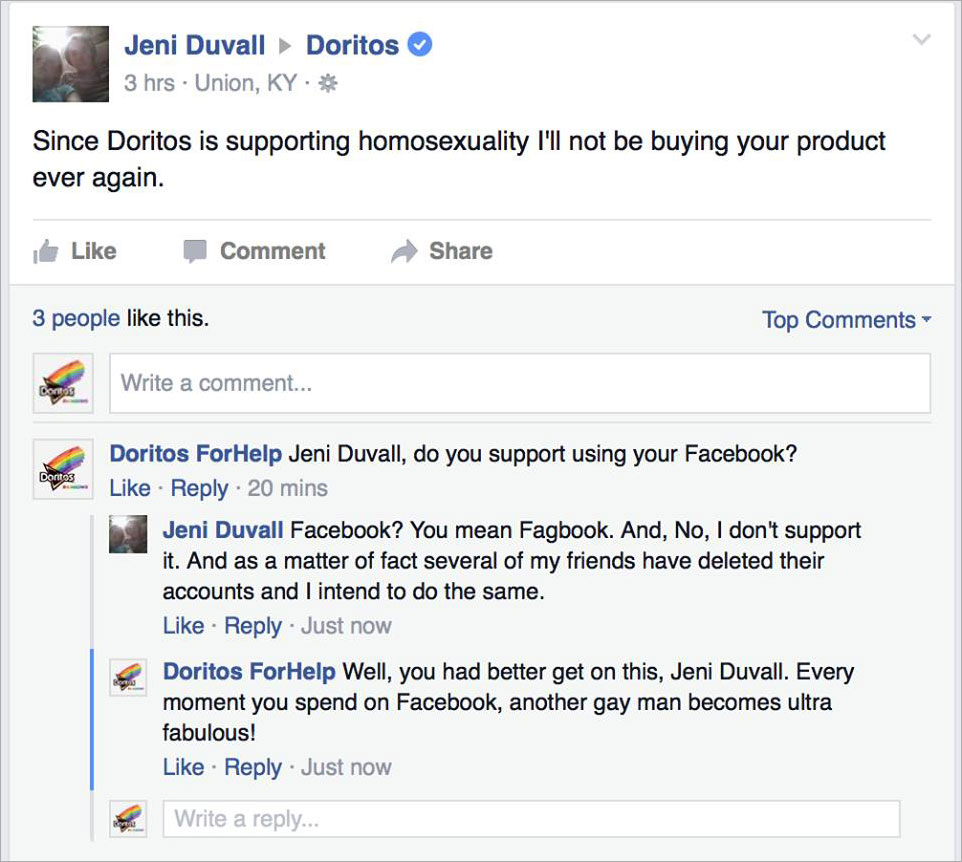
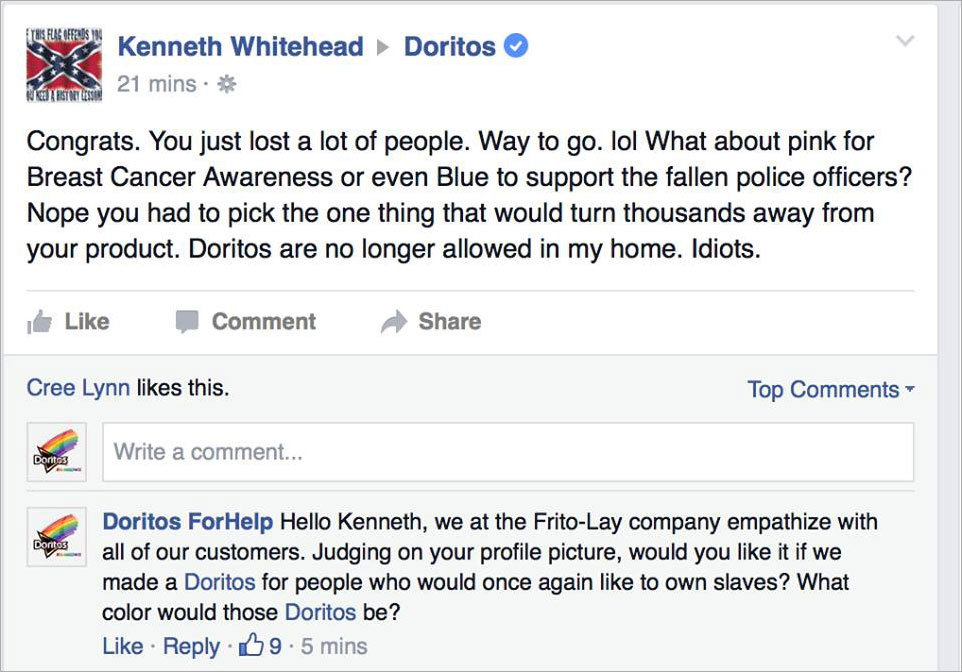 In the viral age of 2015, where a new post can capture the attentions of seemingly endless amounts of people at once, the old adage returns reminding us that “there is no such thing as bad press.” Because whether trolls are busy supporting corporations, or supplanting them, as long as their efforts are creative enough to garner significant attention, the company wins. Traditional marketing techniques, through sponsored posts, banner-ads, video advertisements, are expensive, and not always the most successful. And in-house methods of guerrilla style promotion are often poorly-received, as it becomes transparent that it was an internal endeavour. Trolling on the other hand, is organic, funny, and above-all, unique.
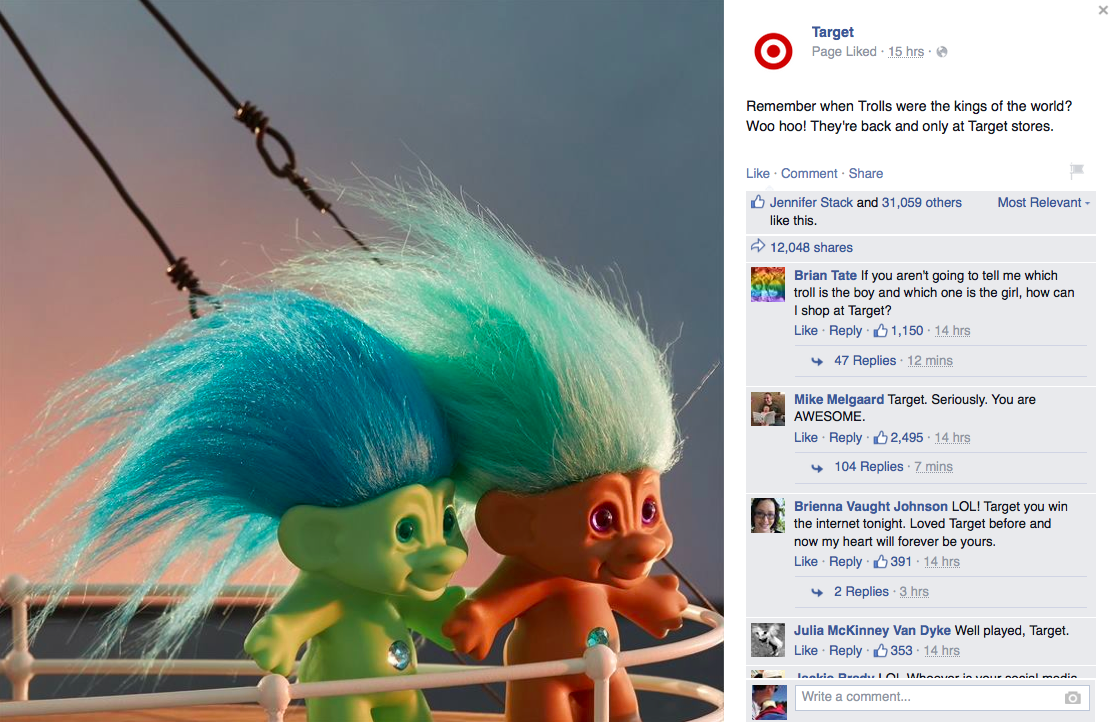
Over the past 6 months, Target has felt the brunt of two different trolling scenarios. One, by the aforementioned Mike Melgaard, worked in a similar fashion to that of his Doritos project. After the company decided to strip all gender-labelling from their products, unhappy customers took to Facebook to let Target know. Melgaard, again posing as a customer service representative, replied in the best way he thought possible.
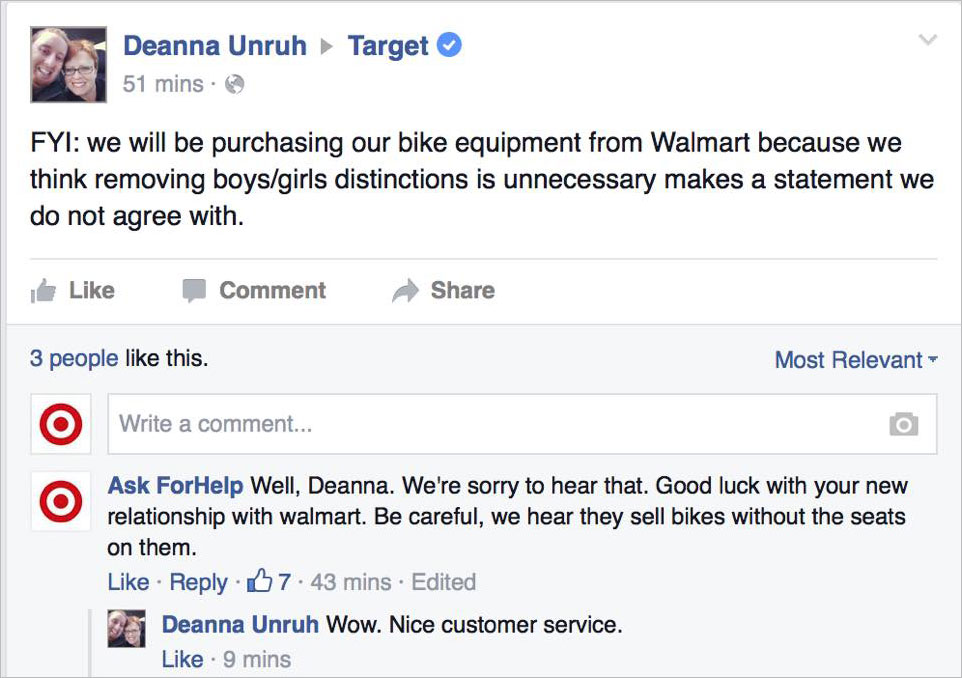 And while Target, like Doritos, never officially issues a statement on the matter, they did give his actions a subtle nod of approval with their subsequent official post.
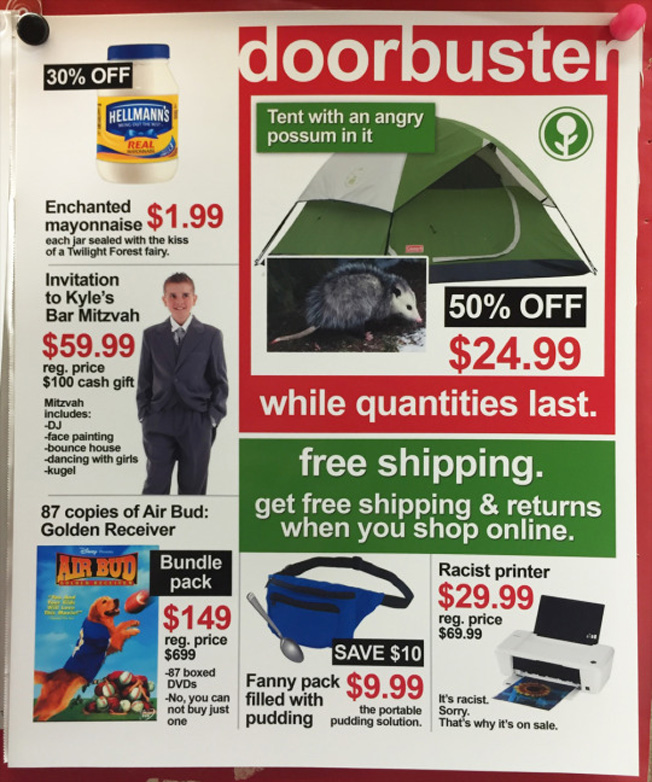
 And yet, just a week ago, Target was the subject of another troll. Comedian Jeff Wysaski took to print in order to poke fun at the company’s Black Friday sales. Promoting items such as a free falcon with adequate purchase, as well as sales for Skittles-branded TVs and Centaur-related items, Wysaski printed these fake flyers and distributed them around his town as well as the store itself. One page of the flyer can be seen here:

While Target may have been annoyed by it’s presence, this lone flyer has now been broadcast online for multitudes of viewers. Some of those viewers may have been intrigued enough to then check out Target’s actual sales. While that conversion rate could never be realistically calculated, it is most certainly present. And Target didn’t have to do anything to get to that point. Sure, they may have had to field a couple disgruntled calls from customers concerning the falcon they never received, but the tradeoff seems worth it.
So go ahead trolls. Wherever you are, keep typing. You’ll get attention, and the company will get free exposure. It’s a win/win.
 Michael Hutchison